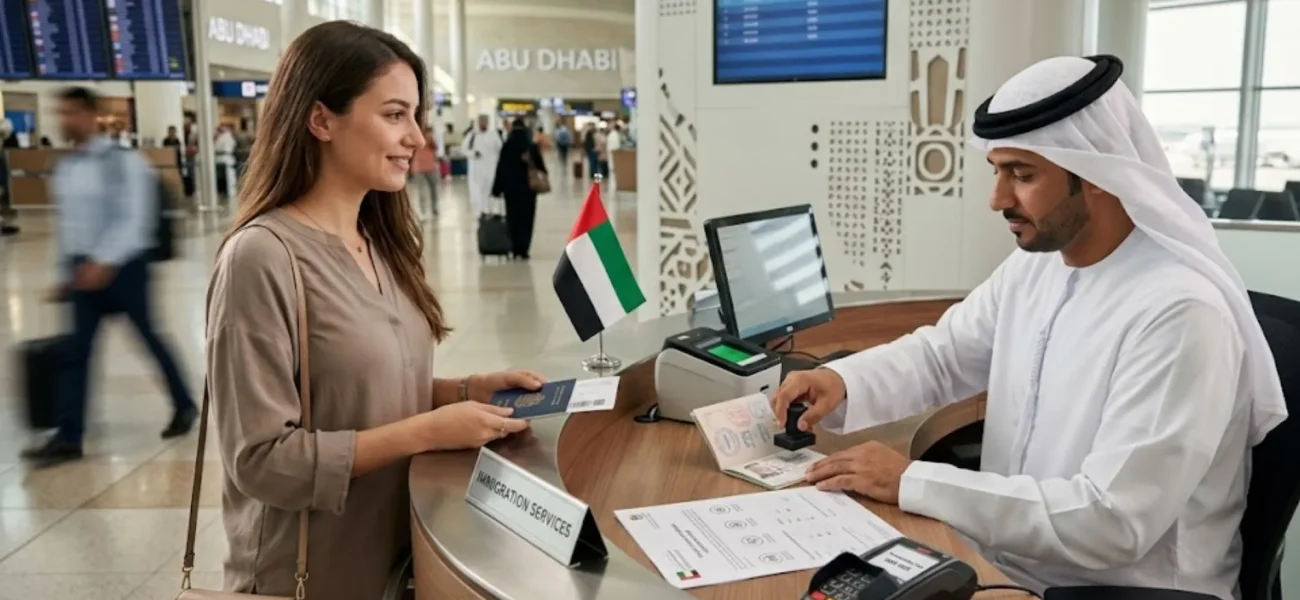
Abu Dhabi and Dubai share the UAE’s unified visa framework — managed by the Federal Authority for Identity, Citizenship, Customs and Port Security (ICP) — but Abu Dhabi International Airport has its own specific transit facilities, stopover programs, and Etihad Airways-specific visa arrangements that differ in meaningful ways from Dubai’s process. Understanding the distinction matters whether you are a first-time transiter or a frequent Etihad flyer managing a complex multi-leg itinerary. For broader UAE travel planning context, the UAE destination and travel guide on HatchMyRide is a useful companion resource alongside this visa cost breakdown.
Do You Actually Need a Transit Visa for Abu Dhabi?
The first question to resolve before worrying about fees is whether you need a transit visa at all. The UAE operates a tiered transit entry system — some nationalities transit without any documentation requirement; others need a pre-arranged visa regardless of whether they exit the airport terminal.
| Transit Category | Who Qualifies | Transit Period Allowed | Visa Required? |
|---|---|---|---|
| Airside transit (no exit) | Most nationalities if staying within the international transit zone | Up to 24 hours | No (for airside only) |
| Visa-free landside transit | Citizens of 60+ exempt countries (US, UK, EU, Australia, etc.) | Up to 96 hours | No |
| Transit visa (96 hours) | Nationalities not on exempt list needing to exit terminal | 96 hours (4 days) | Yes |
| Transit visa (48 hours) | Short layover nationalities requiring exit from airside | 48 hours (2 days) | Yes |
| Etihad stopover visa | Etihad Airways passengers on qualifying itineraries | Up to 96 hours | Yes (arranged via Etihad) |
The critical distinction is between airside transit — remaining within the international transit zone without passing through UAE immigration — and landside transit, which requires exiting the terminal, clearing UAE border control, and entering Abu Dhabi or the UAE. Airside transit requires no visa for virtually all nationalities. Landside transit requires either a visa-free passport or a pre-arranged transit visa, depending on nationality.
Abu Dhabi Transit Visa Fee Structure in 2026
For nationalities that require a transit visa to exit Abu Dhabi airport’s international zone, the UAE government’s ICP sets the official fee schedule. These are the current transit visa fees applying at AUH in 2026:
| Transit Visa Type | Duration | Government Fee (AED) | Approx. USD | Notes |
|---|---|---|---|---|
| 48-Hour Transit Visa | 48 hours from entry | AED 50 – 100 | ~$14 – $27 | Short layover; typically applied via airline or ICP |
| 96-Hour Transit Visa | 96 hours from entry | AED 50 – 100 | ~$14 – $27 | Most common transit visa type |
| Service / Processing Fee (ICP portal) | Per application | AED 28 – 50 | ~$8 – $14 | Administrative charge on top of visa fee |
| Etihad Airways Transit Visa (via airline) | 96 hours | AED 100 – 150 | ~$27 – $41 | Includes service charge; applied through Etihad |
| Third-party visa agent fee (optional) | Per application | AED 50 – 150 | ~$14 – $41 | Avoidable if applying through official channels |
The UAE’s transit visa fees are among the most affordable in the Gulf region — significantly lower than the cost of a full tourist visa (AED 250–800+). For most nationalities that require the visa, the all-in cost of a 96-hour transit including government fee and processing charge falls between AED 78 and AED 150 ($21–$41). This is an accessible price point for a multi-day stopover in one of the world’s most connected hub cities.
Who Gets Free Transit in Abu Dhabi?
A significant number of travellers are surprised to discover they can exit Abu Dhabi airport, spend time in the emirate, and re-enter for their onward flight without paying any visa fee at all. The UAE’s visa-free and on-arrival access policy covers citizens of over 60 countries for stays of up to 30 days, and this policy applies equally to transit passengers.
Citizens of the following categories enter Abu Dhabi transit fee-free and without any pre-application requirement:
- All EU member state passport holders
- United Kingdom, United States, Canada, Australia, New Zealand passport holders
- Japan, South Korea, Singapore, Hong Kong, Macau passport holders
- GCC nationals (Saudi Arabia, Kuwait, Bahrain, Qatar, Oman)
- Selected Latin American passport holders (Brazil, Argentina, Chile, Mexico)
- Malaysia passport holders
For these nationalities, a layover in Abu Dhabi — even one extending to multiple days — requires no visa application, no fee payment, and no pre-travel documentation beyond a valid passport. The simplicity of this arrangement makes Abu Dhabi an exceptionally accessible transit hub for travellers from these countries, and many take advantage of extended stopovers to explore the city’s attractions. For travel ideas on what to do during a longer Abu Dhabi stopover, the budget-friendly UAE activities guide on HatchMyRide covers the wider Emirates’ most accessible experiences.
Nationalities That Require a Transit Visa for Abu Dhabi
The nationalities most commonly requiring a pre-arranged transit visa to exit Abu Dhabi airport’s international terminal include citizens of Pakistan, India, Bangladesh, Nepal, Sri Lanka, Afghanistan, most African countries (excluding selected North African nations), and several other Asian and Middle Eastern nationalities. The specific list is maintained by the ICP and is subject to periodic updates based on bilateral agreements.
It is worth noting that India’s position has historically been more nuanced — Indian passport holders holding valid US, UK, EU, Canadian, or Australian visas have in some periods qualified for a free UAE transit visa on arrival. This arrangement has changed multiple times over recent years and should be verified directly with the ICP or your airline before travel, as policies for Indian nationals regarding UAE transit have not been static.
Pakistani Nationals: Transit Visa Process and Cost
For Pakistani passport holders, a transit visa is required for any stay that involves exiting Abu Dhabi’s international terminal. The 96-hour transit visa is the most appropriate option for stopovers of up to four days and is the most commonly issued category for Pakistani travellers transiting through AUH en route to Europe, North America, or other destinations.
The total cost for a Pakistani applicant applying through the ICP Smart Services portal typically falls between AED 100 and AED 150 ($27–$41), comprising the government transit visa fee plus the processing service charge. Applications can be submitted online before travel, with standard processing taking 24–72 hours. Pakistani travellers in the UAE regularly use Abu Dhabi as a transit hub between South Asia and their Western destinations — and understanding the fee structure is particularly relevant for the large Pakistani community across the Gulf. Practical information on managing administrative processes in the UAE from a Pakistani perspective is covered in resources like the Pakistan-UAE services guide on HatchMyRide.
Etihad Airways Transit Visa: How It Works and What It Costs
Etihad Airways — Abu Dhabi’s national carrier and the dominant airline at AUH — offers a transit visa arrangement specifically for its passengers that differs slightly from applying directly through the ICP portal. For nationalities that require a transit visa, Etihad can facilitate the application as part of the booking or check-in process.
Etihad Transit Visa Process
Etihad’s transit visa process operates through the airline’s passenger services team or the Etihad website. When booking a flight with a qualifying Abu Dhabi stopover, passengers from visa-required nationalities are prompted to apply for the transit visa directly through the Etihad booking portal. The fee charged through Etihad — typically AED 100–150 ($27–$41) including the airline’s service processing component — is marginally higher than applying directly through the ICP portal, but the convenience of a single booking-platform process has real value for first-time transitors unfamiliar with the ICP Smart Services interface.
Etihad Stopover Program
Beyond the standard transit visa, Etihad offers a distinct Stopover Program that allows qualifying passengers to spend up to four nights in Abu Dhabi with discounted hotel rates and curated city experiences arranged through the airline’s partnerships. The stopover visa itself still falls under the standard transit visa cost framework, but the hotel partnership deals can make a planned Abu Dhabi stopover significantly more cost-effective than booking independently. The stopover program is available to passengers booked on Etihad’s long-haul routes and requires pre-arrangement through Etihad’s website before departure.
How to Apply for an Abu Dhabi Transit Visa in 2026: Step-by-Step
- Step 1 — Confirm whether you need a visa: Check the ICP website or contact your airline to determine if your nationality requires a pre-arranged transit visa for landside access at AUH. If you only need airside transit (staying within the international terminal), no visa is required for virtually all nationalities.
- Step 2 — Choose your application channel: Official options include the ICP Smart Services portal (icp.gov.ae), the GDRFA Dubai portal (if your itinerary involves Dubai), or through your airline (Etihad for AUH-routed itineraries). The ICP portal is the most cost-efficient direct channel.
- Step 3 — Prepare your documents: Valid passport (minimum 6 months validity), confirmed onward flight booking, passport-size photograph, and visa for your final destination (where applicable — some nationalities require proof of onward country visa).
- Step 4 — Submit the online application and pay the fee: Complete the form on the ICP portal and pay by credit or debit card. The fee is charged in AED — your bank applies its own currency conversion rate. Save your payment confirmation reference number.
- Step 5 — Receive the visa by email: Standard processing takes 24–72 hours. Some applications approved within hours. Download the visa approval and save it to your phone — have it accessible alongside your passport at UAE immigration.
- Step 6 — Travel and present at Abu Dhabi immigration: Show your visa approval, passport, and onward flight confirmation at AUH immigration. Transit visa holders are typically processed in a dedicated lane and cleared quickly.
- Step 7 — Depart on time: The transit visa validity begins from the time of entry into the UAE. A 96-hour visa means you must depart within 96 hours of the border stamp — not 96 hours from arrival at the airport. Overshooting this window results in an overstay situation with associated fines.
Abu Dhabi Transit Visa vs. Dubai Transit Visa: Key Differences
Because both cities operate under the UAE’s unified visa system, there is a common misconception that a transit visa for Abu Dhabi and a transit visa for Dubai are interchangeable. In practice, they are — a UAE transit visa issued for entry at AUH covers movement within the UAE, and a transit visa issued for DXB covers the same. However, the application channels differ:
| Feature | Abu Dhabi Transit (AUH) | Dubai Transit (DXB) |
|---|---|---|
| Primary application channel | ICP Smart Services / Etihad Airways | GDRFA Dubai / Emirates / Air Arabia |
| Transit visa fee | AED 50–150 ($14–$41) | AED 50–150 ($14–$41) |
| Main carrier facilitating visas | Etihad Airways | Emirates, flydubai, Air Arabia |
| Visa-free nationalities | Same 60+ country list applies | Same 60+ country list applies |
| City access during transit | Abu Dhabi (capital; cultural, quieter) | Dubai (commercial; busier, more tourism infrastructure) |
| Max transit duration | 96 hours (transit visa) | 96 hours (transit visa) |
The practical difference for most transit passengers is the airline they are flying with and the city infrastructure available during the stopover. Dubai’s transit infrastructure — metro connectivity, more hotels at all price points, a larger range of activities — is more developed for leisure transitors. Abu Dhabi offers a more authentic capital-city experience, better access to cultural institutions (the Louvre Abu Dhabi, Sheikh Zayed Grand Mosque), and typically lower hotel costs for the same quality tier.
Transit Visa Costs for Specific Nationalities: Real-World Scenarios
To make the fee information fully practical, here is how the cost structure plays out for the most common transit passenger nationalities through Abu Dhabi:
| Nationality | Visa Required? | Applicable Fee (AED) | Application Channel | Processing Time |
|---|---|---|---|---|
| Pakistani | Yes (96-hr transit visa) | AED 100–150 | ICP portal / Etihad | 24–72 hours |
| Indian | Conditional (check current policy) | AED 0 or AED 100–150 | ICP portal / Airline | 24–72 hours if required |
| Bangladeshi | Yes (96-hr transit visa) | AED 100–150 | ICP portal / Etihad | 24–72 hours |
| Nigerian | Yes (96-hr transit visa) | AED 100–150 | ICP portal | 24–72 hours |
| Filipino | Yes (96-hr transit visa) | AED 100–150 | ICP portal / Etihad | 24–72 hours |
| British / US / EU | No — visa-free access | AED 0 | N/A | N/A |
| Australian | No — visa-free access | AED 0 | N/A | N/A |
Hidden and Additional Costs to Budget for Your Abu Dhabi Transit
The transit visa fee is the most visible cost — but a well-planned Abu Dhabi stopover involves several additional expenses that should be factored into the total budget:
Currency Conversion Fees
Transit visa fees are charged in AED through the ICP portal. If your debit or credit card is denominated in PKR, INR, PHP, NGN, or another currency, your bank applies a conversion rate plus a foreign transaction fee — typically 1.5–3% of the transaction. On an AED 150 application, this adds AED 2–5 (~$0.5–$1.4). Minor in isolation but worth noting for budget completeness.
Hotel and Accommodation Costs
Transit passengers planning to spend the night in Abu Dhabi rather than sleeping in the airport need to budget accommodation. Abu Dhabi’s hotel market offers options from budget properties (AED 200–350/night, ~$55–$95) through mid-range hotels (AED 400–700/night, ~$109–$191) to luxury options. The Etihad Stopover Program’s hotel partnerships occasionally offer rates below market, making it worth checking before booking independently.
Airport Transfer Costs
Abu Dhabi International Airport is located approximately 30 kilometres from the city centre. Taxi fares from AUH to central Abu Dhabi typically run AED 70–90 ($19–$25) one way. The Abu Dhabi Bus service (Route 901) connects the airport to central bus stations for AED 4 ($1.10) — a dramatically cheaper option for budget-conscious transitors willing to accept a longer journey time. For travellers also passing through Dubai on the same trip, the UAE metro and transport guide on HatchMyRide covers transit logistics within the Emirates comprehensively.
UAE Entry Stamp and Exit Requirements
Transit visa holders who exit AUH’s international terminal receive a UAE entry stamp in their passport. This entry on your travel record is permanent — a UAE transit does not negatively affect most future visa applications, but travellers from certain nationalities should be aware that a UAE entry on their passport may affect visa applications for countries that scrutinize Middle East travel records (notably certain US visa applicants who have previously held dual national status). This is not a cost issue but a documentation awareness point.
Abu Dhabi Transit: What to Do During a Layover
A 96-hour transit visa gives four full days in Abu Dhabi — enough time to see the city’s major attractions, experience its distinctive blend of tradition and modernity, and rest properly before a long onward flight. The Sheikh Zayed Grand Mosque — one of the world’s largest and most architecturally impressive mosques — is accessible by taxi from AUH in under 20 minutes and is free to enter. The Louvre Abu Dhabi on Saadiyat Island represents a genuinely world-class cultural institution that few transit passengers think to visit but consistently earn enthusiastic reviews from those who do.
For shorter 48-hour transits, the airport itself has a surprisingly well-developed dining, retail, and rest environment. Abu Dhabi International’s Terminal A — which opened in 2023 — is one of the world’s most modern airport facilities, with lounges accessible to transit passengers, food halls representing international cuisine standards, and efficient airside connections between terminals that minimise the stress of tight connections. The practical travel essentials guide on HatchMyRide covers the items that make long-haul transit layovers significantly more comfortable — particularly relevant for passengers facing overnight connections at AUH.
Common Mistakes That Cost Abu Dhabi Transit Passengers More Money
- Applying for a full tourist visa when only a transit visa is needed: A full UAE tourist visa (AED 250–300+) costs significantly more than a transit visa (AED 50–150). Passengers who are only passing through AUH for a few days should apply specifically for the transit category — not the general tourist visa — to avoid overpaying by AED 100–250.
- Exceeding the transit visa duration: Transit visas begin from the moment you enter the UAE through immigration — not from your flight arrival time. A passenger who clears immigration at 11pm and has a 96-hour transit visa must depart before 11pm four days later. Missing this window triggers an overstay fine of AED 50 per day charged at departure.
- Using third-party visa websites with inflated fees: Dozens of unofficial websites charge AED 200–400 for UAE transit visa processing, when the official ICP portal charges AED 50–150 for the same visa. Always verify the URL — only icp.gov.ae and gdrfad.gov.ae are official UAE government portals.
- Assuming airside transit is available for all connections: Passengers connecting between different airlines — particularly when terminal changes at AUH are required — may need to exit the international terminal, clear immigration, and re-enter through departures. This landside crossing requires a transit visa for nationalities on the visa-required list, even if the transit itself is under six hours.
- Not checking current India-specific transit rules: India’s transit visa eligibility for the UAE has changed multiple times in recent years. Applicants holding valid US, UK, or EU visas have at various points qualified for free UAE transit on arrival, but this arrangement is not permanently guaranteed. Always verify the current policy for Indian passport holders before travel rather than relying on information that may be months old.
Abu Dhabi Transit Visa Refunds: What Happens If Your Connection Is Cancelled
A practical question that rarely appears in visa guides: if your flight is cancelled or severely delayed and you end up staying in Abu Dhabi longer than the transit visa permits, who bears the cost of the overstay?
In cases of airline-initiated disruption — cancelled flights, missed connections due to airline delay — the carrier is generally responsible for accommodation costs, and in many cases the airline also covers the cost of extending your visa or obtaining a new one if the original transit duration is exceeded through no fault of the passenger. The key is documenting the disruption with an official airline certificate of delay or cancellation immediately, before leaving the airport or contacting airline staff. Without documentation, overstay fines fall on the passenger by default regardless of the cause.
The UAE government does not issue automatic overstay waivers for force majeure events at the consumer level — formal extensions require an application and associated fee unless the carrier arranges it directly through their UAE ground handling partner. Passengers experiencing serious disruptions should request that the airline contact UAE immigration on their behalf rather than attempting to navigate the extension process independently.
Health Insurance for Transit in Abu Dhabi: Is It Required?
Transit visitors — those in the UAE for 96 hours or fewer on a transit visa — are not subject to the mandatory health insurance requirements that apply to UAE residents and long-stay visitors. Short-duration transit does not require proof of health insurance as a condition of the transit visa issuance or entry at AUH.
However, carrying personal travel insurance that covers medical emergencies during your transit period is strongly advisable as a matter of practical prudence, not legal requirement. Abu Dhabi’s private hospital system delivers excellent care, but medical treatment costs in the UAE are high by international standards — a single emergency room visit can cost AED 2,000–5,000 ($545–$1,360) without insurance. For passengers spending multiple days in Abu Dhabi, a single-trip travel insurance policy covering medical emergencies typically costs $10–$30 and is available from international providers. The detailed guide to health insurance requirements for longer UAE stays — relevant for those considering extending from transit to tourism — is covered in the Abu Dhabi residence visa and health insurance guide on HatchMyRide.
Frequently Asked Questions About Transit Visa Abu Dhabi Price in 2026
How much does an Abu Dhabi transit visa cost in 2026?
The official government fee for a UAE transit visa (48-hour or 96-hour) is AED 50–100, with an ICP service charge of AED 28–50 on top. The total all-in cost applied through the official ICP portal typically falls between AED 78 and AED 150 ($21–$41). Etihad Airways processes transit visas for its passengers at a similar all-in cost of AED 100–150 including their service component.
Do I need a transit visa for Abu Dhabi if my layover is under 24 hours?
If you remain within the international terminal (airside) throughout your layover — without passing through UAE immigration — you do not need any transit visa, regardless of your nationality or layover duration. A transit visa is only required if you intend to exit the terminal, enter the UAE landside, or if your connecting flight requires a terminal change that involves clearing immigration. Always verify whether your connection requires a terminal change that involves border control before assuming airside transit applies.
Can I apply for an Abu Dhabi transit visa on arrival?
The UAE does not generally offer a walk-up transit visa on arrival at the airport for nationalities that require pre-arrangement. Transit visas must be applied for in advance through the ICP Smart Services portal, through Etihad Airways (for Etihad passengers), or through an authorized visa service before travel. Arriving without the required visa and expecting to obtain it at the airport counter creates significant risk of denial of entry.
How long does an Abu Dhabi transit visa take to process?
Standard processing through the ICP Smart Services portal takes between 24 and 72 hours for most nationalities. Some applications are approved within hours; complex cases or those requiring additional verification may take longer. Apply at minimum 72 hours before your scheduled arrival in Abu Dhabi to allow adequate processing time without requiring urgent processing.
Is the Abu Dhabi transit visa the same as the Dubai transit visa?
Yes — both operate under the UAE’s unified visa framework managed by the ICP. A UAE transit visa is valid for entry at any UAE port of entry, including both AUH and DXB. The application channels differ (ICP portal / Etihad for AUH-focused itineraries; GDRFA / Emirates for DXB-focused itineraries), but the resulting visa and its conditions are equivalent under the UAE’s national immigration framework.
Conclusion: Know Your Transit Visa Abu Dhabi Price Before You Fly
The transit visa Abu Dhabi price in 2026 is one of the most affordable visa charges in the Gulf region — between AED 78 and AED 150 ($21–$41) all-in for nationalities that require it, and completely free for citizens of over 60 countries. The key to budgeting accurately is understanding which category applies to your passport, whether your specific connection requires exiting the international terminal, and whether your airline (Etihad, for AUH flights) has a streamlined visa facilitation process built into your booking. Apply through the official ICP portal at least 72 hours before travel, budget for the transit cost alongside airport transfers and any accommodation if planning an overnight stay, and Abu Dhabi’s world-class transit infrastructure becomes one of the most cost-effective connection points between East and West. For complete travel planning resources across the UAE and the wider region, the UAE travel guides on HatchMyRide provide ongoing destination intelligence for every stage of your journey.
Related Reading: Tourist Visa Canada Price in 2026: Latest Fees, Cost & Charges