
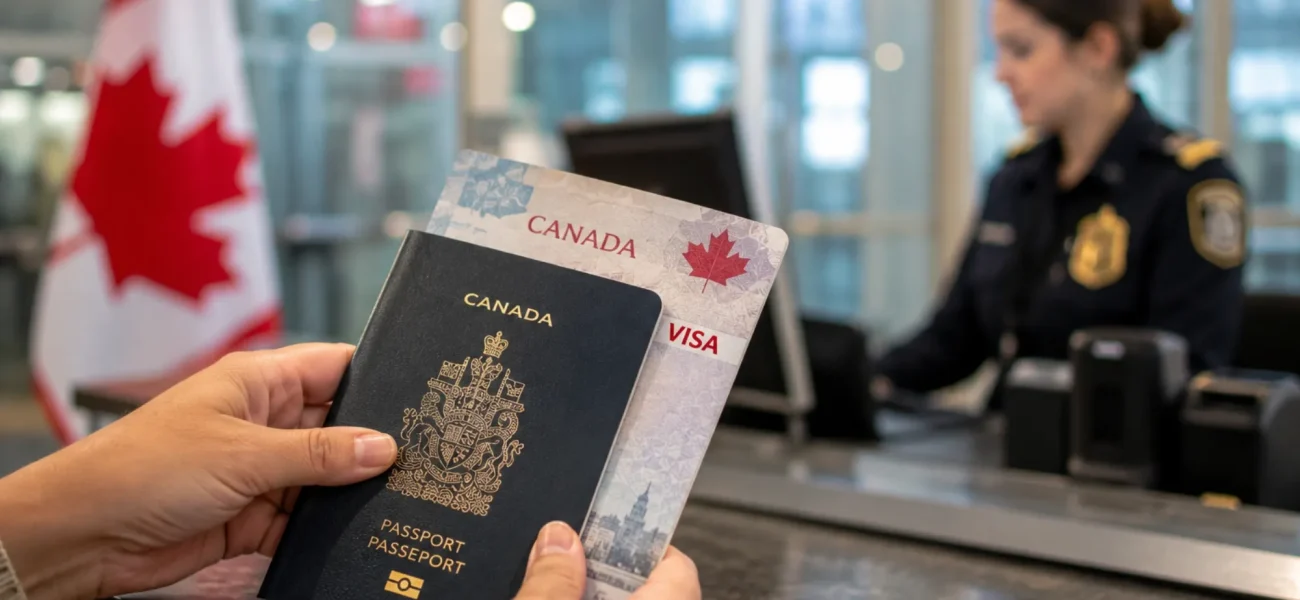
Canada welcomes over 40 million international visitors in a normal year, but the country draws a sharp line between nationalities that can arrive freely and those who must apply for formal permission. For the majority of the world’s passport holders — including citizens of India, Pakistan, Nigeria, the Philippines, and dozens of other countries — a Temporary Resident Visa (TRV) is required before boarding any flight to Toronto, Vancouver, or Montreal. The tourist visa Canada price in 2026 is CAD $100 for the government application fee, but that single number does not capture what most applicants actually pay by the time their visa is stamped and ready.
Biometric fees, VAC service charges, travel insurance, and possibly a Visitor Record extension fee can significantly increase the realistic total cost. And for the large group of travellers who qualify for Canada’s Electronic Travel Authorization (eTA) rather than a full visa, the fee drops dramatically to just CAD $7. Understanding which pathway applies to your passport — and what each truly costs — is the most valuable starting point for any Canada trip budget.
This complete guide covers every Canada tourist visa fee for 2026, the full application process, and the practical insights that help applicants get approvals rather than rejections on the first attempt.
For those planning specific Canadian destinations, our Vancouver destination guide is a useful companion for trip planning once your visa is secured.
Two Entry Pathways: TRV vs. eTA — Which Applies to You?
Canada’s visitor entry system is split into two completely separate pathways, and the pathway that applies to you is determined entirely by your passport nationality.
The Electronic Travel Authorization (eTA) is for visa-exempt travellers who fly to Canada. This includes citizens of the United Kingdom, Australia, France, Germany, Japan, and most other Western European nations, among others. The eTA costs CAD $7, takes minutes to apply for online, and is valid for five years or until passport expiry — whichever comes first. It allows multiple trips to Canada with stays of up to six months each.

The Temporary Resident Visa (TRV) — commonly called the Canada visitor visa or tourist visa — is required for nationals of countries not on Canada’s visa-exempt list. This includes India, Pakistan, Nigeria, Bangladesh, Sri Lanka, Philippines, China, and many others. The TRV costs CAD $100 in government fees, requires biometrics (CAD $85 additional), and involves a full application to Immigration, Refugees and Citizenship Canada (IRCC).
Citizens of the US are the main exception — they do not need a TRV or an eTA to enter Canada by air. They simply need a valid US passport. However, US Lawful Permanent Residents (Green Card holders) of eligible nationalities may need an eTA when flying. US citizens driving or walking into Canada also do not require an eTA — it applies only to air travel.
Canada Tourist Visa (TRV) Price in 2026: Official Fee Breakdown
The IRCC publishes a standardised fee schedule for all immigration and visa applications. For 2026, the fees applicable to a standard tourist TRV are as follows:
| Fee Type | Amount (CAD) | Who Pays | Refundable? |
|---|---|---|---|
| Temporary Resident Visa application fee | $100 | All TRV applicants | No — non-refundable once submitted |
| Biometric enrolment fee (individual) | $85 | First-time biometrics or expired biometrics | No — charged regardless of outcome |
| Biometric fee (family group of 2+) | $170 (max) | Families applying together | No |
| eTA fee (eligible nationals) | $7 | Visa-exempt nationalities flying to Canada | No — even if refused |
| Visitor Record (if extending inside Canada) | $100 | TRV holders extending their stay in Canada | No |
| Source: IRCC Immigration Fee Schedule (Canada.ca), verified 2026. All fees in CAD. | |||
The Biometric Fee: Why the Canada Visa Costs More Than CAD $100
One of the most frequent budget miscalculations for first-time Canada TRV applicants is accounting only for the CAD $100 application fee. The biometric enrolment fee is mandatory for most TRV applicants aged 14–79, and at CAD $85, it represents a near-doubling of the base cost for an individual.
Biometrics — fingerprints and a digital photograph — are collected at a Visa Application Centre (VAC) and stored for 10 years. Once your biometrics are on record with IRCC, you do not pay the CAD $85 again for subsequent applications within that 10-year window. Citizens of certain nationalities (including US citizens, who are visa-exempt) and people aged under 14 or over 79 are exempt from the biometric requirement.
The family group cap of CAD $170 applies when two or more family members submit their biometrics together at the same appointment. Regardless of family size, the maximum biometric charge for a group cannot exceed CAD $170 — making it more cost-effective for larger families to apply and attend their biometric appointments together rather than separately.
Total Realistic Canada Tourist Visa Cost by Applicant Type (2026)
| Applicant Type | TRV Fee (CAD) | Biometric Fee (CAD) | VAC Service Charge (CAD, approx.) | Realistic Total (CAD) |
|---|---|---|---|---|
| Individual TRV (first-time biometrics) | $100 | $85 | ~$22–$40 | ~CAD $207–$225 |
| Individual TRV (biometrics on record) | $100 | $0 | ~$22–$40 | ~CAD $122–$140 |
| Couple / 2-person family (new biometrics) | $200 | $170 (max) | ~$44–$80 | ~CAD $414–$450 |
| Family of 4 (parents + 2 children under 14) | $400 | $170 (parents) + $0 (children) | ~$80–$160 | ~CAD $650–$730 |
| eTA applicant (visa-exempt national) | N/A | N/A | N/A | CAD $7 total |
| VAC service charges are paid to the local application centre operator (VFS Global or equivalent) and vary by country. Verify current rates at your nearest VAC. | ||||
VAC Service Charges: The Third Layer of Canada Visa Costs
Visa Application Centres in most countries charge an optional or mandatory service fee for the administrative handling of your application. In Canada’s case, VACs are operated primarily by VFS Global in many parts of the world. The service charge typically ranges from approximately CAD $22–$40 per applicant equivalent, though it varies by country and fluctuates with local currency conversions.
VAC charges cover document scanning, secure transmission to IRCC, and passport return. They also offer optional premium services — priority queuing, premium lounge access, and passport courier return — each adding incremental cost. None of these premium options affect the IRCC processing decision itself; they are entirely about application submission convenience.
It is worth noting that many countries allow applicants to submit their TRV applications entirely online through the IRCC portal without using a VAC. In countries where in-person biometric collection is required, the VAC visit is mandatory for that step regardless of how the application form is submitted.
Hidden and Additional Costs Every Canada Visa Applicant Should Budget For
The government fee and biometric charge are the core costs — but experienced travellers and immigration professionals consistently highlight several additional expenses that quietly push the total cost of a Canada tourist visa higher than the headline figures suggest.
| Cost Type | Approximate Amount | Mandatory? | Notes |
|---|---|---|---|
| Travel insurance | CAD $50–$150+ per trip | Strongly recommended; required by some sponsors | Canada has no reciprocal healthcare for visitors; out-of-pocket hospital costs can be substantial |
| Document translation | CAD $50–$150 per document | Yes (for non-English/French docs) | Must be by a certified translator recognised by IRCC |
| Bank statement notarisation | CAD $20–$60 local equiv. | Situational | Some applicants need notarised financial evidence |
| Immigration consultant / lawyer fee | CAD $200–$1,500+ | Optional | Regulated Canadian Immigration Consultants (RCICs) only; avoid unregulated agents |
| Passport photographs | CAD $10–$20 local equiv. | Yes | Strict IRCC specifications apply |
| Courier / passport return | CAD $15–$35 local equiv. | Optional | If not collecting passport in person from VAC |
Canada does not provide healthcare to temporary visitors. A single emergency hospital visit can cost CAD $3,000–$10,000 or more without insurance. While travel insurance is not an explicit requirement on the IRCC application form, consular officers routinely assess financial preparedness as part of the application — and demonstrating that you have insurance coverage is one of the stronger signals of genuine intent to visit and return home.
Canada eTA Price in 2026: Who Pays Just CAD $7?
The Canadian Electronic Travel Authorization is one of the most cost-efficient entry systems operated by any G7 country. At just CAD $7 per applicant, it covers nationals of approximately 53 countries — mostly Western European nations, Australia, New Zealand, South Korea, Japan, Chile, and several others.
The eTA is applied for entirely online at canada.ca/en/immigration-refugees-citizenship — the process takes under 10 minutes for most applicants and approvals arrive by email, typically within minutes to a few days. The eTA is tied to your passport and valid for five years or until the passport it is linked to expires, whichever comes first. Within that window, you can make unlimited trips to Canada, staying up to six months per visit.
Fee: CAD $7 per person. Validity: 5 years or passport expiry. Entries: unlimited. Max stay per visit: up to 6 months. Processing: typically immediate to 72 hours. Applies to: air travel only — eTA is not required when entering Canada by land or sea from the US for eligible nationals.
How Canada’s TRV Compares to Other Popular Tourist Destination Visa Fees
Context matters when evaluating the Canada tourist visa price in 2026. Compared to peers, Canada’s CAD $100 government fee is moderate — but the combination of application fee plus biometric fee makes the realistic total for first-time TRV applicants one of the higher costs among English-speaking destinations.
| Destination | Visa Type | Government Fee | Biometric / Extra Fee | Realistic Total |
|---|---|---|---|---|
| Canada | TRV (Tourist) | CAD $100 (~USD $74) | CAD $85 biometrics | ~CAD $207+ (~USD $154+) |
| United Kingdom | Standard Visitor Visa | £135 (~CAD $243) | VAC service fee | ~£148–£175 |
| United States | B-1/B-2 Tourist | USD $185 (~CAD $250) | VAC service fee | ~USD $205–$215 |
| Australia | Visitor (Subclass 600) | AUD $190 (~CAD $175) | Health/police checks | AUD $250–$350+ |
| Germany (Schengen) | Type C Tourist Visa | €90 (~CAD $135) | VFS service + insurance | ~€155–€300 |
| Dubai (UAE) | 30-Day Tourist Visa | AED 200 (~CAD $73) | Agency service charge | AED 300–500+ total |
| Exchange rates are approximate as of mid-2026. Canada’s TRV fee is competitive with global peers; biometric addition makes all-in cost comparable to US and UK. | ||||
For travellers who are comparing Canada against other accessible destinations — particularly those exploring Egypt as an alternative warm-weather destination — the Egypt e-visa price guide for 2026 on this site offers a useful cost comparison for another popular tourist market.
Required Documents for a Canada Tourist Visa Application in 2026
The IRCC evaluates every TRV application on two central questions: whether the applicant has a genuine, temporary reason to visit Canada, and whether they have sufficient ties to their home country to ensure they will leave at the end of the permitted stay. Every document in the application package should speak to one or both of these questions.
- Valid passport — must remain valid for at least 6 months beyond the intended departure date from Canada; two blank pages required
- Completed online application form (IMM 5257) — filled through the IRCC portal at canada.ca; digital signature required
- Recent passport-size photographs — two photos meeting IRCC biometric photo specifications (35×45mm, white background, full face front view)
- Proof of financial means — bank statements for the last 3–6 months showing sufficient funds for the trip; CAD $10,000 is a commonly cited informal benchmark for a two-week visit, though there is no hard-coded minimum
- Travel itinerary — confirmed flight booking (or reservation) and accommodation bookings for the duration of stay in Canada
- Proof of home ties — employment letter on company letterhead, leave approval, property ownership documents, tax records, or family responsibilities demonstrating compelling reason to return home
- Letter of invitation — if visiting family or friends in Canada; the host should provide their Canadian immigration status, contact information, and address
- Travel insurance certificate — covering medical emergencies for the full duration of the Canada visit
- Previous travel history — copies of previously issued visas (US, UK, Schengen) strengthen TRV applications significantly by demonstrating established international travel credibility
Step-by-Step: How to Apply for a Canada Tourist Visa in 2026
Canada visa applications are submitted through the IRCC online portal. Most applicants can complete the process entirely online, though a VAC visit is required for biometric collection where applicable.
-
Create a GCKey or Sign-In Partner account
Visit canada.ca and create a secure account to access the IRCC application portal. Your GCKey is how you access, save, and submit your application, and how you receive correspondence from IRCC throughout the process. Keep your credentials safe — you will need them throughout the processing period. -
Complete the online TRV application (IMM 5257)
Fill in all fields accurately. The form asks for personal information, travel history, employment background, and your specific plan for the Canada trip. Consistency between your application and supporting documents is critical — discrepancies are a leading cause of refusal. -
Upload all supporting documents
Scan and upload your passport, photographs, financial evidence, employment documents, travel itinerary, and invitation letter (if applicable). File formats accepted include PDF, JPEG, and PNG. Each document must be clear, complete, and within the file size limits displayed on the portal. -
Pay the CAD $100 TRV application fee
Payment is made online through the IRCC portal using a credit or debit card. The fee is charged in CAD and is non-refundable once submitted. If you are paying from a non-CAD bank account, your card issuer will apply a foreign exchange conversion — typically 1–3% above the interbank rate. -
Receive your biometric instruction letter
After submitting your application and fee, IRCC will issue a biometric instruction letter within a few days. This letter authorises you to book your biometric appointment at a VAC. You have 30 days from the date of the letter to complete biometrics. -
Book and attend your VAC biometric appointment
Visit the VFS Global portal (or equivalent VAC operator) for your country to book your appointment. Bring your passport, biometric instruction letter, and the CAD $85 biometric fee payment (made online before or at the VAC). Fingerprints and a digital photo are taken — the entire appointment takes approximately 15–20 minutes. -
Wait for the IRCC decision and passport return
After biometrics, IRCC processes the application and makes a decision. If approved, your passport is stamped with the TRV and returned via the VAC (in-person collection or courier). If additional documents are requested, respond promptly through your GCKey account — delayed responses extend processing times.
Canada visa processing times from most South Asian and African applicant countries currently sit between 4 and 12 weeks depending on application volumes. Build in a generous buffer — particularly if you are applying from India, Nigeria, or Pakistan, where IRCC processing centres handle very high application volumes. Check the real-time processing time estimates at the IRCC website on the day you submit.
Processing Time for Canada Tourist Visa in 2026
IRCC publishes live processing time estimates on its website, updated weekly based on current application volumes. The estimates represent the time from when IRCC receives your complete application — including biometrics — to when a decision is made. In 2026, typical processing times for major applicant nationalities include:
| Country of Application | Typical Processing Window | Notes |
|---|---|---|
| India | 4–12 weeks | High-volume applicant country; apply early |
| Pakistan | 4–10 weeks | Similar volume pressure to India processing |
| Nigeria | 4–8 weeks | VAC availability also affects overall timeline |
| Philippines | 3–8 weeks | Large diaspora connection; strong travel history helps |
| China | 4–10 weeks | High demand periods extend window |
| UAE (Dubai) | 3–6 weeks | Lower volume; faster processing typical |
| UK (applying for spouse/family) | 2–4 weeks | UK-resident applicants often processed faster |
| Times are approximate; check real-time estimates at ircc.canada.ca on the day of application. Biometric appointment availability may add additional time to overall timeline. | ||
Common Mistakes That Lead to Canada TRV Refusals
- Weak ties to home country — the most common and most preventable cause of refusal. An application without strong evidence of employment, property, family responsibilities, or financial commitments at home leaves the visa officer with no compelling reason to believe you will return. Include every piece of evidence available.
- Insufficient financial evidence — bank statements that show low balances, recent large deposits of unclear origin, or only savings accounts (without active transaction history) raise concerns. Use current account statements showing consistent income and regular financial activity.
- Applying too close to the intended travel date — submitting with less than 4 weeks to departure leaves no margin for the standard processing window, let alone any request for additional documents.
- Inconsistencies between form and documents — if your application form states you are employed by Company X but your bank statement header shows Company Y, officers flag the discrepancy. Ensure every detail matches across all submitted documents.
- Previous refusals not declared — IRCC requires disclosure of all previous visa refusals worldwide. Failure to disclose is treated as misrepresentation and carries serious consequences, including 5-year bans on Canadian immigration applications.
- Using unregistered immigration consultants — anyone receiving payment to represent you in a Canadian immigration application must be a Regulated Canadian Immigration Consultant (RCIC) or a licensed lawyer. Unregistered consultants operating in high-demand countries often provide incorrect advice or submit fraudulent applications.
For travellers who enjoy well-planned, intelligently researched trips — not just the visa process, but the journey itself — our guide to smart travel planning covers the broader framework of making international trips exceptional from start to finish. And if you are building a comparison of visa costs before deciding on your next destination, our travel prices category brings together detailed fee guides across multiple countries.
Extending Your Stay: Visitor Record and Status Extension Costs
If you arrive in Canada on a TRV and want to extend your stay beyond the initial period authorised by the border officer (typically six months), you must apply for a Visitor Record before your current status expires. The Visitor Record application fee through IRCC is CAD $100 — the same as the initial TRV fee — and it is submitted entirely online while you are in Canada.
Applications must be submitted before the expiry of your current authorised stay. Submitting after expiry means your status has already lapsed, which is an immigration violation. IRCC recommends applying at least 30 days before your authorised stay ends to allow time for processing and to maintain legal status throughout the review period.
For travellers who plan to explore multiple Canadian cities — from the Rockies to Quebec City — having the right visa duration from the outset avoids the added cost and administrative burden of a mid-trip extension application. Our Vancouver guide and our feature on Canada travel and places offer a strong starting point for planning what to do with your approved visit duration.
Frequently Asked Questions: Canada Tourist Visa Price in 2026
1. Is the Canada tourist visa fee the same for all nationalities?
Yes — the IRCC Temporary Resident Visa application fee of CAD $100 is the same for all nationalities that require a TRV. There is no reciprocity-based differential the way some countries (like the US) apply. The biometric fee of CAD $85 also applies uniformly to eligible applicants. The only pathway with a different (lower) fee is the eTA at CAD $7, which applies to visa-exempt nationalities.
2. Is the Canada TRV fee refundable if my visa is refused?
No — the Canada visa application fee and biometric fee are both non-refundable once submitted. This applies regardless of the outcome — whether the visa is approved, refused, withdrawn, or if you do not attend your biometric appointment. Always prepare a thorough, well-evidenced application before paying.
3. How long is a Canada tourist visa valid?
A Canada TRV can be issued as a single-entry or multiple-entry visa. The validity period is determined by the visa officer and is typically up to 10 years (or until passport expiry, whichever comes first) for multiple-entry visas, though the actual stay permitted per visit is determined by the border officer at entry — usually up to 6 months per visit. A single-entry TRV is used up the moment you enter Canada.
4. Do children need to pay the biometric fee for a Canada visa?
Children under 14 years old are exempt from the biometric requirement and do not pay the CAD $85 biometric fee. Children aged 14 and over must provide biometrics and pay the fee. The family cap of CAD $170 applies when two or more family members (14 and over) submit biometrics together at the same appointment.
5. Can I apply for a Canada tourist visa without a travel agent?
Yes — and it is recommended. The IRCC online portal is accessible to all applicants directly, and there is no requirement to use an agent or consultant. The CAD $100 fee goes directly to the Canadian government through the IRCC payment gateway. If you do choose to use an immigration consultant, ensure they hold a valid RCIC designation. Using an unlicensed agent does not reduce your application fee but adds cost and risk without legal protection.
Canada Tourist Visa Price in 2026: The Complete Budget Picture
The tourist visa Canada price in 2026 is CAD $100 in government fees — but that is never the full story. When you add the mandatory biometric fee of CAD $85 (for most applicants), the VAC service charge of approximately CAD $22–$40, and the practical costs of travel insurance, document translation, and photographs, the realistic all-in cost for a first-time TRV applicant sits between CAD $207 and CAD $265 before insurance. For visa-exempt nationals using the eTA, the total is just CAD $7.
Both fees are non-refundable. Both require accurate, consistent applications with strong supporting evidence. The single most impactful thing you can do to protect your investment is to build a complete, well-evidenced application that demonstrates genuine temporary intent and compelling home ties before a single dollar is paid. Canada’s immigration officers are trained to assess exactly these factors — and applications that address both clearly have a substantially higher approval rate than those that treat the process as a formality.
Plan early, prepare thoroughly, and budget realistically — and Canada’s extraordinary landscapes, cities, and experiences are well within reach. For more travel cost guides and destination planning resources, explore the full travel prices and visa guides at HatchMyRide.