
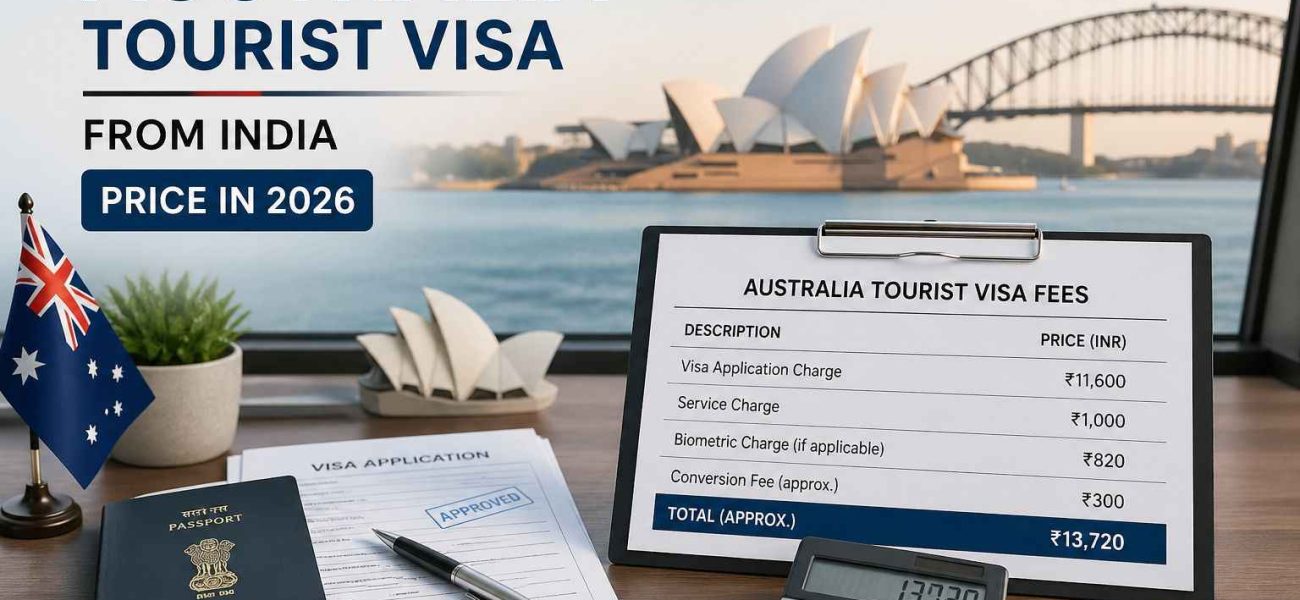
There’s a moment every traveler faces before booking that long-awaited trip to Australia—the moment when visa costs come into focus. Flights can be compared, hotels can be adjusted, but visa expenses often feel unclear until the last minute. In 2026, the pricing structure for an Australia tourist visa from India has evolved slightly, making it even more important to understand where your money actually goes.
This guide walks through the real cost, not just the official fee, but everything around it—from application charges to hidden expenses that many applicants overlook.
What Kind of Tourist Visa Do Indians Apply For?
Most Indian travelers apply for the Visitor Visa (Subclass 600), which allows short-term stays for tourism, family visits, or casual travel. While it’s not a “1-year unlimited stay visa,” it often comes with multiple-entry options over a longer validity period.
The total cost depends heavily on how you apply, your travel frequency, and whether you choose standard or assisted processing.
Breaking Down the Real Visa Cost (Beyond the Official Fee)
The official visa application fee is just one part of the total expense. In reality, applicants pay a combination of government fees, service charges, and preparation costs.
Here’s how the cost typically builds up in 2026:

- Base Visa Fee: Around INR 9,000 to INR 11,000 depending on currency fluctuation
- Biometric Submission Fee: Approximately INR 1,200 to INR 2,000
- Service or Agency Fee: INR 3,000 to INR 10,000 (varies widely)
- Documentation Preparation: INR 1,000 to INR 3,000
- Optional Fast Processing: INR 2,000 to INR 5,000
In total, most applicants end up spending between INR 15,000 to INR 30,000 depending on their choices and urgency.
Why Some Applicants Pay More Than Others
Not everyone pays the same amount for the same visa, and that often creates confusion. The variation usually comes down to a few practical factors rather than hidden fees.
Applicants who use agents or consultants typically pay higher service charges, while those applying independently online often save money but invest more time. Similarly, last-minute travelers may pay extra for faster processing or document handling.
If you’re exploring travel-related insights or planning broader trips, the platform’s destination and travel category can give you a wider perspective on planning costs.
Application Flow: What Actually Happens After You Apply
Understanding the process helps explain why certain costs exist. The application isn’t just a form submission—it’s a multi-step verification process.
- Online application submission through the official portal
- Document upload and verification
- Biometric appointment at a visa center
- Background checks and eligibility review
- Final decision and visa grant notification
Each step contributes either directly or indirectly to the overall cost.
Documents That Can Affect Your Approval (and Cost)
Incomplete or weak documentation is one of the biggest reasons people end up spending more than expected. Reapplications, corrections, and delays all increase the final expense.
- Passport with at least 6 months validity
- Bank statements showing financial stability
- Travel itinerary and accommodation details
- Employment or business proof
- Cover letter explaining travel purpose
Strong documentation not only improves approval chances but also avoids additional processing costs.
Comparing 2026 Visa Costs with Previous Years
Visa pricing has gradually increased over the years, mostly due to currency fluctuations and administrative adjustments.
| Year | Average Total Cost (INR) | Trend |
|---|---|---|
| 2024 | 12,000 – 22,000 | Stable |
| 2025 | 14,000 – 26,000 | Slight Increase |
| 2026 | 15,000 – 30,000 | Moderate Increase |
The rise is gradual, but noticeable, especially for applicants using third-party services.
When Paying More Actually Makes Sense
There are situations where spending extra is justified. For example, if your travel dates are fixed and close, paying for faster processing can prevent costly delays. Similarly, first-time applicants sometimes prefer professional help to reduce rejection risk.
Travel planning often involves similar decisions, whether it’s flights, accommodation, or even route planning like those discussed in adventure travel planning guides.
Common Mistakes That Increase Visa Expenses
Many applicants unknowingly increase their costs through avoidable mistakes.
- Submitting unclear or incorrect documents
- Applying under the wrong visa category
- Using unreliable agents
- Waiting until the last minute
A well-prepared application is often the cheapest one.
Smart Ways to Keep Your Visa Budget Under Control
Managing visa costs is less about cutting corners and more about making informed choices.
- Apply early to avoid urgency fees
- Use official portals instead of middlemen when possible
- Prepare documents carefully to avoid rework
- Compare service providers before choosing one
Even small decisions can make a noticeable difference in your total expense.
Is the Australia Tourist Visa Worth the Cost?
For most travelers, the answer is yes—but only when the application is handled correctly. Australia offers a well-structured visa system, and once approved, it provides flexibility for multiple visits within the validity period.
The key is understanding that the “price” isn’t just a number—it’s a combination of preparation, process, and planning.
Final Thoughts
The Australia tourist visa price from India in 2026 is best understood as a range rather than a fixed fee. While the base application cost remains fairly standard, the final amount depends on how you apply, how prepared you are, and how quickly you need approval.
With proper planning, accurate documentation, and a clear understanding of the process, you can control your expenses and focus on what truly matters—your travel experience.
Related Reading: Tourist Visa Japan Price in 2026: Updated Fees and Price Breakdown