The global travel landscape for Saudi Arabia has undergone a remarkable transformation over the past few years, and by 2026, the country has firmly positioned itself as one of the most accessible yet strategically structured destinations for international visitors. What once felt like a complex visa process has now evolved into a more streamlined system—but the pricing structure still reflects a layered combination of government policy, service infrastructure, and evolving tourism demand.
The Saudi Arabia tourist visa price in 2026 is not just a fixed number; it represents a broader ecosystem of entry facilitation, digital processing systems, insurance integration, and administrative service charges. Understanding this cost breakdown is essential for travelers who want to avoid surprises and plan a realistic travel budget.
In this detailed travel intelligence report, we break down the visa fee structure, hidden costs, real-world scenarios, and planning strategies that modern travelers need before visiting Saudi Arabia.
The Changing Economics of Saudi Arabia Tourist Visa Pricing
Saudi Arabia’s visa pricing model is shaped by its Vision 2030 tourism strategy, which aims to diversify the economy and attract millions of international visitors annually. Unlike traditional visa systems that rely solely on embassy processing, Saudi Arabia integrates digital platforms, insurance requirements, and third-party facilitation systems.
This layered structure means that the final cost is not only a government fee but also a reflection of operational efficiency, security screening, and tourism infrastructure investment. As a result, travelers often find that pricing includes multiple components rather than a single flat fee.
For travelers researching entry conditions, official guidance can often be cross-referenced through resources like travel advisory insights and global mobility updates, which help contextualize how visa systems evolve over time.

Saudi Arabia Tourist Visa Price 2026: Core Fee Structure
By 2026, the Saudi tourist visa system is expected to remain largely digital, with e-visa applications dominating global entry approvals. The cost structure is generally divided into government charges, mandatory insurance, and optional service fees depending on how the application is processed.
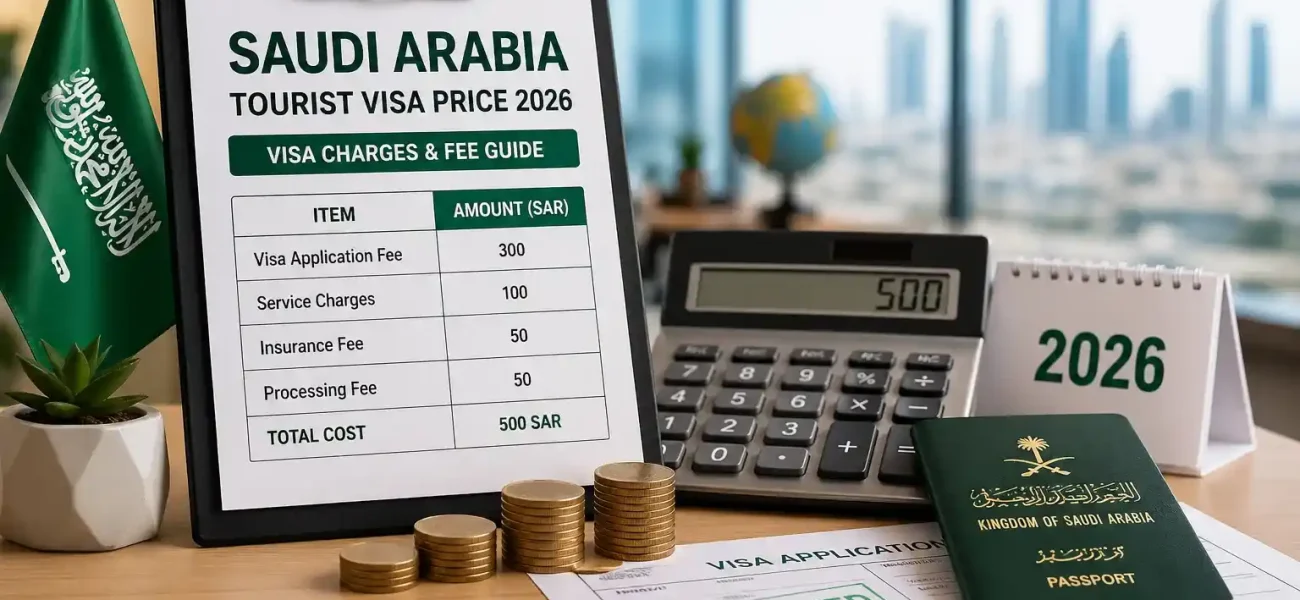
Instead of a single fixed rate, the pricing behaves like a bundled service model, where each component contributes to the final cost. Below is a realistic breakdown of how travelers should expect the system to function.
Estimated Saudi Tourist Visa Cost Breakdown
- Government visa fee: Covers entry permission and processing verification
- Mandatory medical insurance: Required for all international travelers
- Service platform charges: Digital application system handling fee
- Agent or facilitation fee (optional): Applied when using travel agencies
- Processing speed upgrade: Faster approvals may incur additional cost
These combined elements typically determine the final visa cost range, which varies depending on nationality, duration, and application method.
Realistic Saudi Visa Cost Range in 2026
While exact pricing may vary slightly depending on policy updates, travel industry estimates suggest that Saudi Arabia’s tourist visa cost in 2026 remains within a structured mid-range bracket compared to global destinations. The pricing is intentionally designed to balance accessibility with administrative sustainability.
In most cases, travelers can expect a total visa expenditure that includes both mandatory and optional components, especially if applying through third-party services or expedited channels.
This pricing model reflects not only entry permission but also the broader experience of secure digital verification and tourism infrastructure support, which is now standard across Gulf countries.
Why Saudi Arabia Visa Costs Are Structured This Way
The pricing structure is not arbitrary. It is influenced by several macro-level factors including digital transformation, tourism expansion goals, and international compliance standards. Saudi Arabia has invested heavily in smart visa systems that integrate security screening, biometric verification, and automated approval workflows.
Another key factor is tourism positioning. As Saudi Arabia opens landmark destinations like NEOM, AlUla, and Red Sea Project zones, visa systems are designed to regulate and optimize visitor flow while maintaining infrastructure sustainability.
Interestingly, similar structured pricing models can also be observed in global travel infrastructure discussions on platforms such as international travel cost breakdowns and pricing trends, where visa systems are analyzed as part of broader tourism economics.
Hidden and Indirect Costs Travelers Often Overlook
Beyond the official visa fee, travelers often encounter additional expenses that are not always highlighted during the application process. These indirect costs can significantly affect the overall travel budget if not anticipated in advance.
- Currency conversion and international payment fees
- Travel insurance upgrades beyond mandatory coverage
- Document translation or attestation services
- Express courier or document handling charges
- Mobile SIM or connectivity setup upon arrival
These costs vary depending on individual travel behavior, but they are particularly relevant for first-time visitors who prefer convenience over manual application handling.
Visa Application Process and Cost Flow Explained
The Saudi tourist visa application process in 2026 is designed to be largely digital, reducing embassy dependency and improving turnaround time. However, the cost flow still depends on how the traveler chooses to apply.
For example, a direct self-application through the official platform usually results in a lower total cost, while using a travel agent introduces service fees but improves convenience and approval guidance.
The decision often comes down to traveler psychology—budget-conscious travelers prioritize direct applications, while convenience-focused travelers prefer guided processing even at a higher cost.
- Submit online application through official visa platform
- Upload required documents and passport details
- Pay government and insurance fees
- Receive digital verification and processing update
- Obtain approved e-visa via email or portal
Saudi Tourist Visa Types and Cost Variations
Different visa categories also influence the total cost structure. While the standard tourist visa remains the most common option, variations exist depending on entry frequency and duration.
Short-term single-entry visas typically cost less, while multiple-entry visas or extended validity options may increase total fees due to enhanced flexibility and processing requirements.
| Visa Type | Typical Use Case | Cost Impact |
|---|---|---|
| Single Entry Tourist Visa | Short vacations or first-time visits | Lowest cost structure |
| Multiple Entry Visa | Frequent travelers or business-tour mix | Higher due to flexibility |
| Extended Stay Visa | Long cultural or tourism stays | Premium pricing range |
Travel Planning Strategy for Saudi Arabia in 2026
From a strategic travel perspective, understanding visa pricing is only one part of the journey. Smart travelers align visa application timing with flight bookings, seasonal tourism patterns, and accommodation planning to optimize total trip cost.
Saudi Arabia’s peak tourism seasons—particularly winter months—often see increased demand, which indirectly affects service speed and optional processing fees. Planning ahead allows travelers to avoid premium charges and last-minute service costs.
For broader travel preparation insights and regional travel guides, resources like global travel exploration and destination planning guides provide useful context for combining visa planning with itinerary design.
Final Thoughts: Understanding the Real Value Behind Visa Costs
The Saudi Arabia tourist visa price in 2026 reflects more than just administrative fees—it represents a modernized travel gateway shaped by digital infrastructure, tourism expansion strategy, and international mobility standards. While the cost may appear layered, it ultimately supports a smoother, more secure, and more efficient entry experience.
For travelers, the key is not just understanding how much the visa costs, but why it is structured that way. Once this is clear, planning becomes easier, budgeting becomes more accurate, and travel decisions become more confident.
Saudi Arabia is no longer just a destination—it is a rapidly evolving travel ecosystem. And understanding its visa pricing is the first step toward experiencing it intelligently.
Related Reading: Tourist Visa US Price in 2026: Visa Charges and Fee Guide
Related Reading: Dubai Tourist Visa Price in 2026: Visa Charges and Fee Guide
Related Reading: Thailand Tourist Visa Price in 2026: Visa Charges and Fee Guide
Related Reading: Saudi 90 Days Visa Price in 2026: Visa Charges and Fee Guide