Introduction
Taking your dog along for a drive can be fun, but an unsecured dog can become a serious safety risk during sudden braking, sharp turns, or a collision. That is why choosing the right dog seat belts and crash-tested car hammocks matters far beyond convenience. The right setup can help limit your dog’s movement, reduce driver distraction, and create a more controlled space in the back seat.
However, there is an important distinction that many pet owners miss: a car hammock and a crash-tested restraint do different jobs. A hammock can protect your vehicle’s upholstery and create a contained riding area, but a hammock by itself should not be treated as a crash restraint. Independent pet-safety research supports using a properly tested restraint when crash protection is the goal.
In this guide, we’ll explain what to look for in dog seat belts and crash-tested car hammocks, how independent crash testing works, why some popular tether systems can be risky, and how to build a safer backseat setup for your dog.
Why Dog Seat Belts and Crash-Tested Car Hammocks Matter
Dogs are not naturally secured passengers. During a sudden stop, even a calm dog can be thrown forward because of inertia. A larger dog can also become a hazard to people sitting in the vehicle if it is launched from the rear seat.
The Center for Pet Safety (CPS), an independent nonprofit focused on companion-animal transportation safety, has conducted crash testing specifically to examine how canine restraints perform. Its early research found that many products marketed for vehicle use did not provide adequate protection in simulated crashes.
This is why simply buying something labeled “dog seat belt” is not enough. The important questions are how the restraint was tested, what size dog was used during testing, how the restraint connects to the vehicle, and whether the complete system limits dangerous movement.

A hammock has a different purpose. It stretches across the rear seating area and can help stop your dog from moving into the footwell. It also helps protect seats from mud, fur, scratches, and spills. Current veterinary-reviewed guidance similarly emphasizes that a hammock should be viewed as a containment and upholstery-protection accessory rather than a substitute for a crash-tested restraint.
What Makes a Dog Seat Belt Crash-Tested?
The phrase “crash-tested” is frequently used in pet-product marketing, but consumers should look for specific evidence rather than relying on the wording alone.
Look for Independent Testing
Independent testing is valuable because it provides evidence beyond a manufacturer’s own marketing claims. CPS maintains a certification program for products that meet its independently developed safety standards and testing requirements.
For example, the current CPS database identifies the Sleepypod Clickit range as having passed CPS testing in November 2022, with testing conducted under CPS-001-014.01.
That kind of information is much more useful than a package simply saying “safety tested.”
Check the Entire Restraint System
A strong harness is only part of the equation. The connection between the harness and vehicle is equally important.
CPS warns against extension tethers and zipline-style products because they can allow excessive movement during a crash. According to CPS, these systems can increase forces on the dog’s body and may undermine the protection offered by an otherwise tested harness.
For this reason, avoid assuming that a longer tether automatically gives your dog greater freedom and comfort. In a moving vehicle, excessive freedom of movement can create additional safety problems.
Fit Matters
Even a well-designed restraint cannot perform as intended if it is incorrectly sized or fitted.
A harness should fit according to the manufacturer’s measurements rather than simply being selected based on breed. Check your dog’s weight and chest measurements and follow the manufacturer’s fitting instructions carefully.
A restraint that is too loose can allow excessive movement, while one that is improperly positioned may create pressure in the wrong places.
How Crash Testing Has Changed the Pet-Safety Conversation
The development of crash-test dogs has helped researchers examine pet restraints without using live animals. CPS explains that its testing uses specially designed crash-test dog models rather than live animals.
Its early 2011 pilot study was particularly revealing. Using conditions modeled on FMVSS 213, a standard associated with child restraint testing, CPS evaluated canine automotive restraints for large dogs. The pilot reported a 100% failure rate among the tested harnesses under that study’s criteria.
Later testing became more sophisticated. In its 2013 research, CPS used preliminary quasi-static testing to evaluate harness strength before products moved into crash testing. Importantly, CPS notes that passing the strength test alone did not mean a product provided crash protection.
This distinction is important for shoppers. A product can be physically strong without controlling a dog’s movement effectively during a collision.
Where Crash-Tested Car Hammocks Fit In
The phrase “crash-tested car hammock” can be confusing because a hammock and a harness are fundamentally different products.
A typical backseat hammock attaches to headrests and stretches across the seating area. Its main functions are containment, comfort, and vehicle protection. It can stop your dog from dropping between the seats and can make the rear passenger area easier to clean.
But the hammock generally isn’t designed to absorb crash forces through a dog’s body.
That means a practical setup can involve both a restraint and a hammock. The restraint controls the dog, while the hammock creates a comfortable surface beneath the dog and helps prevent access to the footwell.
The important point is not to mistake the hammock itself for the crash-protection component.
What to Look for in a Quality Dog Car Hammock
A good hammock should complement your dog’s restraint rather than interfere with it.
Seat-Belt Access
Look for a hammock that provides appropriate access to the vehicle’s seat-belt buckles or restraint connection points. This allows your dog to remain restrained without forcing you to modify or cut the cover.
Secure Headrest Straps
The straps should attach securely to the vehicle’s headrests and remain properly positioned while your dog moves around.
Non-Slip Construction
A non-slip bottom can help keep the hammock from sliding around when your dog stands, lies down, or changes position.
Durable, Waterproof Material
For everyday travel, waterproof or water-resistant fabric can be especially useful. Dogs often enter vehicles after walks, hikes, beach trips, or rainy-weather outings.
A washable surface also makes regular maintenance easier.
Appropriate Vehicle Fit
Measure your back seat before purchasing. A hammock that is too narrow may leave gaps, while one that is too large can interfere with doors or passengers.
If you frequently carry human passengers, consider whether the hammock allows part of the rear seat to remain usable.
Dog Seat Belt vs. Car Hammock: Understanding the Difference
A dog seat belt and a car hammock shouldn’t necessarily be viewed as competing products.
The seat belt or harness is intended to restrain the dog. The hammock is primarily designed to create a protected and contained seating area.
Think of the difference this way: the restraint addresses movement, while the hammock addresses the environment around the dog.
This is why combining the two can make practical sense. A properly fitted, independently tested restraint can provide the primary restraint function, while a hammock underneath can protect the vehicle and make the ride more comfortable.
Recent consumer survey data also shows that many dog owners use multiple types of travel products together, including seat covers, harnesses, seat belts, and hammocks.
Common Mistakes to Avoid With Dog Seat Belts
One of the biggest mistakes is attaching a vehicle tether directly to a dog’s collar. A sudden stop can place dangerous forces around the neck.
A properly designed restraint system should use the manufacturer’s intended attachment points.
Another mistake is choosing a restraint solely because it has a high number of customer reviews. Reviews can tell you about comfort, durability, installation, and everyday usability, but they don’t replace controlled crash testing.
It is also easy to assume that “heavy-duty” hardware equals crash safety. CPS specifically notes that preliminary strength testing does not itself establish crash protection.
Finally, avoid adding aftermarket extension tethers simply to give your dog more room. CPS specifically advises against extension and zipline-style systems.
How to Set Up Your Dog’s Backseat Safely
Start by positioning your dog in the rear seating area rather than allowing free access to the front seats.
Install the hammock according to its instructions, making sure the headrest straps are properly secured and the cover does not obstruct important vehicle controls or seat-belt mechanisms.
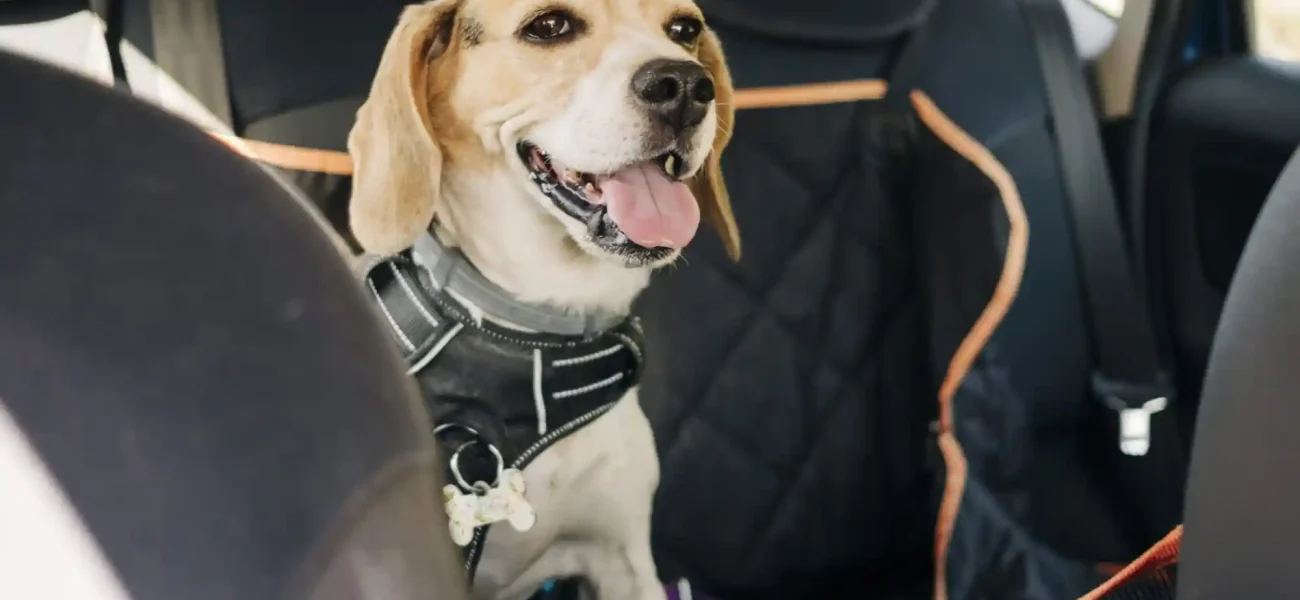
Next, fit the crash-tested harness to your dog. Check the manufacturer’s instructions carefully, especially around chest placement and adjustment.
Connect the restraint exactly as intended. Avoid improvising with additional straps, carabiners, extension leads, or homemade connectors.
Before driving, perform a simple stationary check. Make sure your dog can sit, stand, and lie down comfortably without having excessive slack that permits unnecessary forward movement.
The goal is controlled movement, not complete immobilization.
Are More Expensive Dog Seat Belts Always Safer?
Price alone does not establish safety.
A cheaper product may be suitable for everyday containment but have no independent crash-test evidence. Meanwhile, a more expensive harness may have undergone substantial testing.
Rather than starting with the price tag, start with evidence. Look for independent certification, documented testing, appropriate sizing information, durable construction, and clear instructions.
CPS currently provides a searchable certified-products database so consumers can verify products rather than relying entirely on advertising language.
Build a Complete Backseat Safety System
The best approach to dog seat belts and crash-tested car hammocks is to understand what each product is actually designed to do.
A hammock can make the back seat cleaner, more comfortable, and more contained. A properly tested harness and restraint can address the much more important issue of controlling your dog’s movement. The two can work together, but they should not be confused with one another.
When shopping, prioritize independently verified testing, correct fit, appropriate attachment points, and straightforward installation. Avoid relying solely on phrases such as “heavy-duty,” “safety certified,” or “crash tested” unless you can find meaningful evidence behind those claims.
Before your next road trip, check your dog’s measurements, inspect your current restraint for wear, verify how it connects to your vehicle, and make sure your hammock does not interfere with the restraint. A few minutes of preparation can make every trip more organized and give your dog a dedicated, comfortable place to ride.
FAQs
Are dog seat belts actually safe?
A properly designed and independently tested dog restraint can help control a dog’s movement during vehicle travel. However, not every product sold as a dog seat belt has undergone independent crash testing. Look for documented testing or certification and follow the manufacturer’s fitting and installation instructions.
Is a dog hammock safer than a seat belt?
They serve different purposes. A hammock primarily creates a contained backseat area and protects the vehicle interior, while a properly tested harness and restraint system is intended to control the dog’s movement. A hammock should not be considered a substitute for a crash-tested restraint.
Should dogs wear a harness or a seat belt in the car?
For vehicle travel, a purpose-designed crash-tested harness connected according to its instructions is generally the relevant type of restraint to consider. A standard walking harness may not have been designed or tested for crash forces.
Can a dog sit in the front seat with a seat belt?
The back seat is generally the better location for a restrained dog because airbags are designed around human occupants and can create additional risks for pets. Keeping the dog properly restrained in the rear seating area also reduces opportunities for driver distraction.
Do dog car hammocks prevent injuries in a crash?
A typical hammock should not be relied upon as a crash restraint. Its primary benefits are containment, comfort, and protecting the vehicle interior. Crash protection depends on the restraint system and how effectively it controls the dog’s movement.
Are extension dog seat belts safe?
CPS advises against extension tethers and zipline-style products because they can provide excessive movement and potentially increase injury risks during sudden stops or crashes.
What is the safest way to transport a dog in a car?
The appropriate solution depends on the dog’s size, vehicle, and travel arrangement. For dogs riding in the back seat, a properly fitted, independently tested harness can be considered along with a suitable seat cover or hammock. For other situations, a properly secured crash-tested carrier or crate may be appropriate. CPS maintains certified categories covering harnesses, carriers, and travel crates.