Introduction
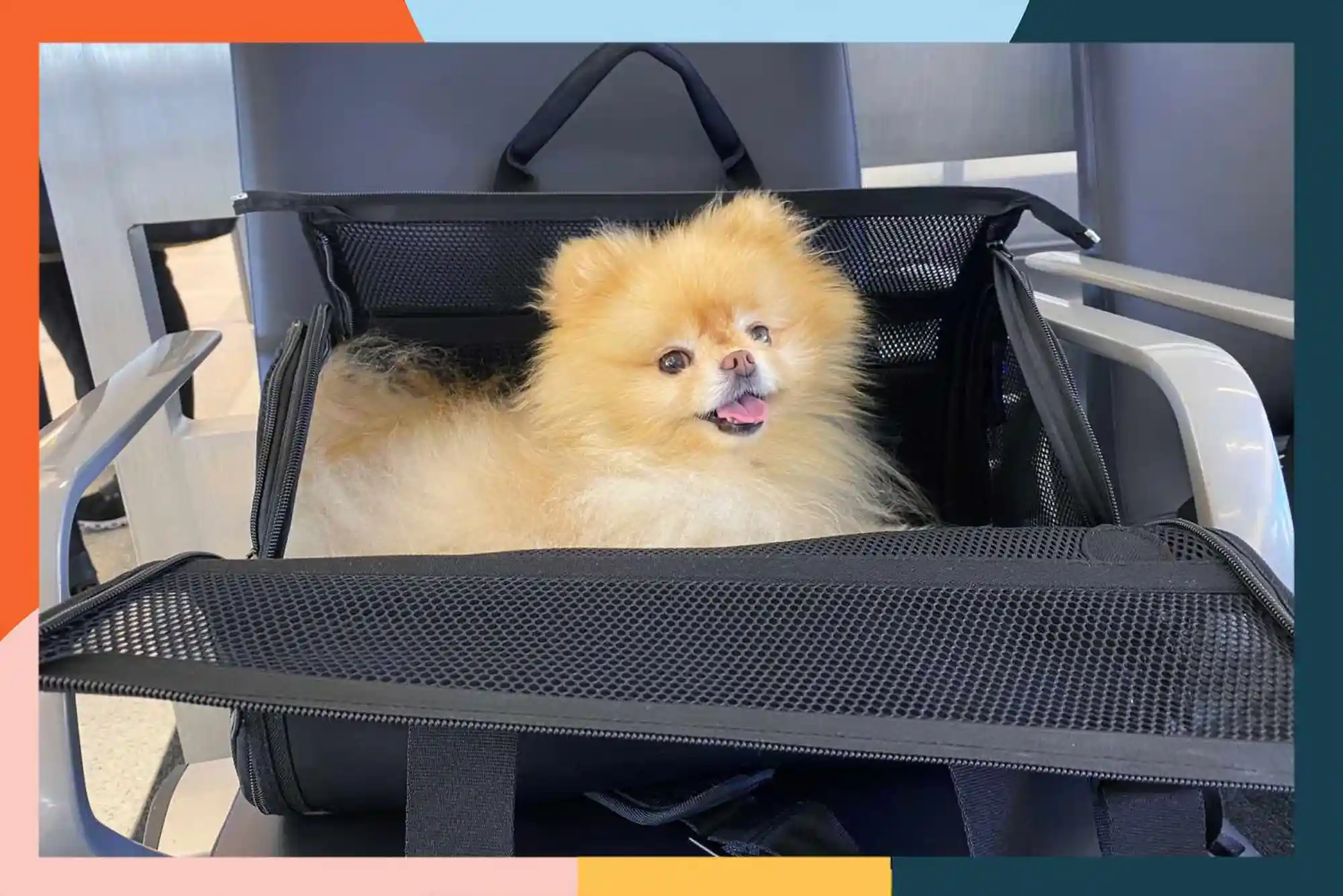
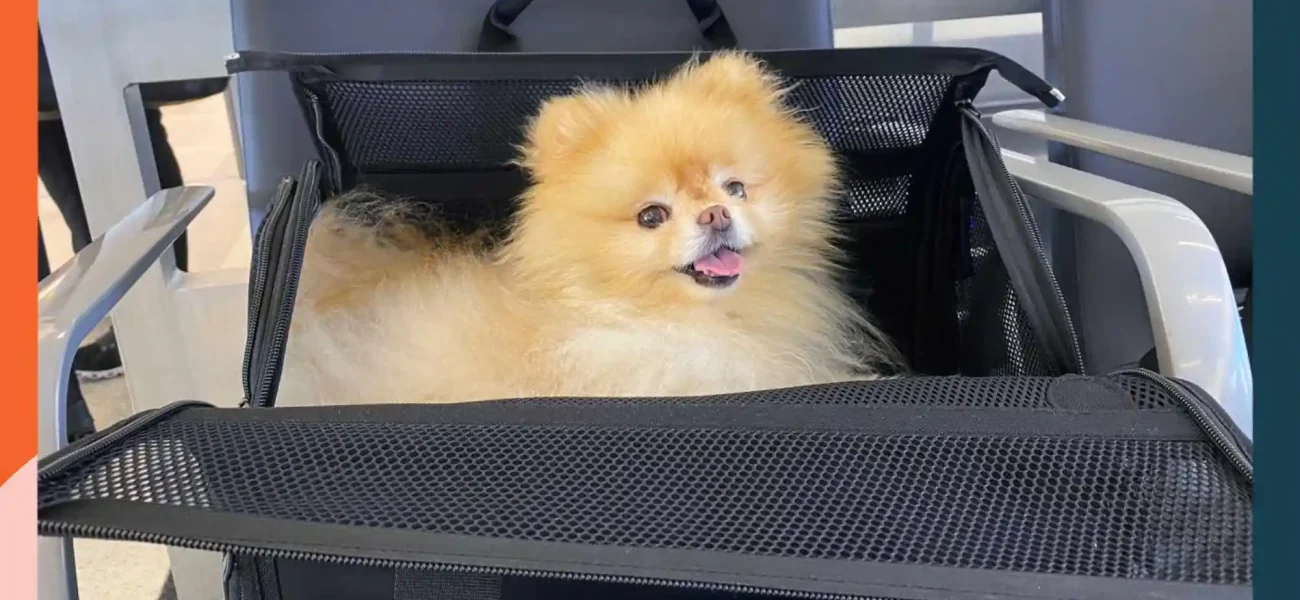
Flying with a dog or cat can be surprisingly simple when you choose the right carrier. The challenge is that an airline approved pet carrier is not simply a bag with a label claiming it is “airline approved.” Airlines set their own requirements, and the carrier must fit beneath the seat while keeping your pet secure and adequately ventilated.
For most in-cabin trips, a soft-sided carrier is the practical choice because it can flex slightly when placed beneath the seat. However, flexibility does not mean the carrier should be so small that your pet cannot sit, turn around, or lie naturally.
The Federal Aviation Administration (FAA) explains that when an airline permits pets in the passenger cabin, the pet carrier is treated as carry-on baggage and must remain properly stowed under the seat during taxi, takeoff, and landing. Airlines can also impose additional requirements concerning dimensions, pet size, documentation, and the number of animals permitted.
That makes choosing the right airline approved pet carriers less about finding a universal “approved” model and more about matching the carrier to your airline, aircraft, and pet.
What Makes Airline Approved Pet Carriers Suitable for Flying?
The phrase “airline approved” can be misleading. There is no universal certification that guarantees a particular carrier will be accepted by every airline. IATA itself states that it does not certify, approve, endorse, or sell particular pet-container brands or models.
Instead, a suitable carrier needs to satisfy several practical requirements.

The carrier must fit under the seat
Under-seat space is the most important consideration for an in-cabin pet carrier. The FAA requires the container to be small enough to fit underneath the seat without blocking anyone’s path to the main aisle.
This is why soft-sided carriers are popular for air travel. Fabric construction can allow a carrier to compress slightly where appropriate, whereas a rigid carrier has a fixed exterior shape.
Still, never assume that a flexible bag can simply be squeezed into any space. Excessive compression can reduce ventilation and make the interior uncomfortable for your pet.
Your pet needs enough usable space
The smallest possible carrier is not automatically the safest or most comfortable option.
IATA guidance says a dog or cat traveling in the cabin should be able to sit or stand naturally, turn around, and lie down comfortably inside its container. The organization also emphasizes that the available space beneath aircraft seats can be very limited.
Before buying, measure your pet rather than relying only on its weight. A long-bodied dog may require a different carrier shape from a compact dog with the same weight.
Ventilation matters
Good ventilation is essential during a flight. Look for substantial mesh ventilation panels on multiple sides rather than a carrier with only a small opening at the front.
IATA’s current container guidance emphasizes adequate ventilation and warns that compressing ventilation openings beneath an aircraft seat can contribute to reduced airflow and heat buildup.
This is particularly important because the carrier will spend much of the flight beneath the seat, where airflow can be more restricted.
Soft-Sided vs. Hard-Sided Pet Carriers for Cabin Flights
For most passengers searching for airline approved pet carriers for under-seat travel, soft-sided designs are easier to work with.
A soft carrier can be lighter, easier to carry through an airport, and more adaptable to the limited space beneath different aircraft seats. Many also include mesh panels, padded interiors, shoulder straps, and multiple access points.
Hard-sided carriers provide greater structural rigidity and can be easier to clean, but their fixed dimensions can make under-seat fitting more difficult. A carrier that technically meets one airline’s dimensions may still be awkward to position beneath a particular aircraft seat.
The important distinction is that cabin suitability depends on the airline’s requirements and the actual seat configuration—not simply whether the carrier is soft or hard.
How to Measure Your Pet for an Airline Carrier
Buying according to a carrier’s advertised weight limit alone is one of the most common mistakes pet owners make.
Start by measuring your pet while standing naturally.
Measure from the tip of the nose to the base of the tail for length. Measure the pet’s height from the floor to the highest point of the head or ears, depending on which is higher. Also measure the widest part of the body.
IATA provides a more detailed method for determining minimum internal container dimensions using the animal’s length, height, and shoulder width. Its guidance emphasizes that the measurements should reflect the largest animal when more than one animal is being considered.
Once you know your pet’s measurements, compare them with the interior dimensions of the carrier, not merely its exterior dimensions.
Padding, frames, pockets, and thick walls can substantially reduce usable interior space.
Why Under-Seat Dimensions Vary Between Airlines
There is no universal under-seat dimension that guarantees acceptance everywhere.
The FAA leaves cabin-pet acceptance to individual airlines, and airlines can establish their own policies. Those policies may include restrictions on carrier dimensions, pet weight, species, seating locations, and the number of pets allowed in the cabin.
The aircraft itself can also affect available space.
A carrier that fits comfortably under one aircraft seat may be harder to position under another aircraft’s seat because of differences in seat structure, leg placement, or available floor space.
For that reason, treat measurements printed on a carrier’s packaging as a starting point—not a guarantee of boarding.
Important Features to Look for in Airline Approved Pet Carriers
The best airline approved pet carriers should make airport travel easier while providing a secure environment for your pet.
Strong ventilation panels
Choose a carrier with generous mesh ventilation that cannot easily be covered when the carrier is placed beneath the seat.
Secure closures
Zippers and other closures should resist accidental opening. Some carriers include clips or locking points that provide additional security.
Leak-resistant construction
Accidents can happen during stressful travel. A leak-resistant base with removable, washable padding makes cleanup considerably easier.
A stable base
Your pet should not spend the entire flight sitting on a collapsing floor. A firm, supportive base can make the carrier feel more stable while still allowing the carrier itself to remain flexible.
Comfortable carrying options
A padded shoulder strap or comfortable handles can make a major difference when you’re moving through a busy terminal with luggage and a pet.
Easy access
Multiple access points can be helpful at the airport, particularly when you need to safely place your pet inside the carrier without struggling with a narrow opening.
How to Make Sure Your Carrier Actually Fits Under the Seat
Don’t wait until travel day to discover that your carrier is too large.
Before your flight, check your airline’s current pet policy and compare its stated maximum dimensions with the carrier’s exterior measurements. If the airline provides specific guidance for your aircraft or seating location, use that information.
The FAA specifically advises travelers to contact their airline because some airlines do not permit pets in the cabin at all, while others have additional requirements.
It’s also wise to avoid assuming that a carrier advertised online as “fits all airlines” actually does. Airlines can change policies, and aircraft configurations differ.
For international travel, the situation can become more complicated. Destination countries may require health certificates, import documents, vaccinations, or other paperwork. IATA recommends checking the regulations of the countries you are traveling to and through well before departure.
Preparing Your Pet Before the Flight
Even the best carrier will not automatically make your pet comfortable.
Introduce the carrier at home several weeks before the trip whenever possible. Leave it open in a familiar room and allow your pet to investigate it voluntarily.
Once your pet is comfortable entering the carrier, gradually increase the amount of time spent inside. Short practice sessions can help your pet associate the carrier with normal daily activities rather than treating it as a signal that something frightening is about to happen.
IATA recommends introducing dogs and cats to their travel container well before the journey to reduce stress associated with confinement.
Avoid making the first carrier experience happen at the airport.
Avoid unnecessary sedation
Air travel can be stressful, but sedating a pet without veterinary direction is not an appropriate solution. IATA advises against sedation or tranquilization for dogs and cats traveling by air because these medications can reduce their ability to respond to transportation-related stress. If medication is administered, IATA says it should be under veterinary direction and the airline should be informed.
If your pet has a history of severe travel anxiety, discuss the situation with a veterinarian before your trip.
What to Pack Alongside the Pet Carrier
Your carrier is only one part of the travel setup.
Bring absorbent bedding that fits inside the carrier without taking away too much usable space. A spare absorbent pad can also be useful for long journeys.
You may also want to carry a small amount of your pet’s normal food, water, waste bags, cleaning supplies, medication prescribed by your veterinarian, and copies of relevant travel documents.
Avoid filling the carrier with bulky toys or accessories. The goal is to keep enough interior room for your pet to maintain a natural position.
Common Mistakes When Choosing an Airline Pet Carrier
One mistake is buying a carrier solely because an online seller describes it as “airline approved.”
Another is choosing a carrier based only on the pet’s weight. Weight does not tell you whether your pet can comfortably turn around or lie down.
Some owners also measure the carrier but forget to check the airline’s maximum dimensions. Others choose a carrier with excellent ventilation but place it beneath the seat in a way that blocks the ventilation panels.
Finally, don’t wait until the day before departure to check the airline’s policy. Airlines can limit the number of pets permitted in the cabin, and some require advance arrangements.
Choose for Fit, Safety, and Your Specific Airline
The right airline approved pet carriers are not necessarily the ones with the most impressive marketing claims. The better approach is to start with your airline’s current rules, measure your pet accurately, and then choose a carrier that fits the available under-seat space without sacrificing ventilation or comfort.
A good in-cabin carrier should be secure, breathable, reasonably easy to clean, and comfortable enough for your pet to remain inside during the flight. Most importantly, remember that airline policies can differ—even when two carriers appear almost identical.
Before buying, check the airline’s official pet policy, confirm the permitted carrier dimensions for your flight, and introduce your pet to the carrier well in advance.
FAQs
Can I bring my pet carrier on a plane?
Yes, if the airline permits pets in the passenger cabin and your carrier meets its requirements. The FAA requires an in-cabin pet container to fit under the seat without blocking the aisle, and it must remain properly stowed during taxi, takeoff, and landing.
What size pet carrier fits under an airplane seat?
There is no single size that fits every aircraft or airline. Many commonly marketed soft-sided cabin carriers are around the 18-by-11-by-11-inch range, but airlines publish their own limits and those requirements can vary. Always check your airline’s current policy before purchasing or traveling.
What is the best pet carrier for airline travel?
The most suitable carrier is one that fits your airline’s published under-seat dimensions while giving your pet adequate ventilation, security, and usable interior space. A carrier should be selected according to your specific airline and pet rather than a universal “best” label.
Can a dog sit in a carrier under the seat on a plane?
Small dogs may be permitted to travel in a carrier beneath the seat when the airline allows pets in the cabin. The dog generally needs to remain inside the carrier throughout the flight and the carrier must comply with the airline’s rules.
Do airlines actually check pet carrier size?
Airlines can enforce their published carrier requirements, and acceptance can depend on the carrier’s ability to fit in the required under-seat space. Because policies vary, passengers should not assume that a carrier advertised as airline-friendly will automatically be accepted.
Can I use a soft-sided carrier under an airplane seat?
Yes. Soft-sided carriers are commonly used for in-cabin pet travel because their flexible construction can make under-seat placement easier. However, the carrier still needs to comply with the airline’s dimensions and must maintain adequate ventilation.
How long can a dog stay in a carrier on a plane?
The answer depends on the length of the journey and the individual pet. Since the carrier will generally remain under the seat throughout the flight, it is important to choose an appropriately sized carrier and prepare your dog beforehand. IATA recommends acclimating pets to their containers before travel.
Do I need an airline-approved carrier for my cat?
You need a carrier that meets the requirements of the airline you’re traveling with. For international travel, additional destination-country and IATA-related requirements may also apply. Checking the airline and destination rules before departure is essential.