
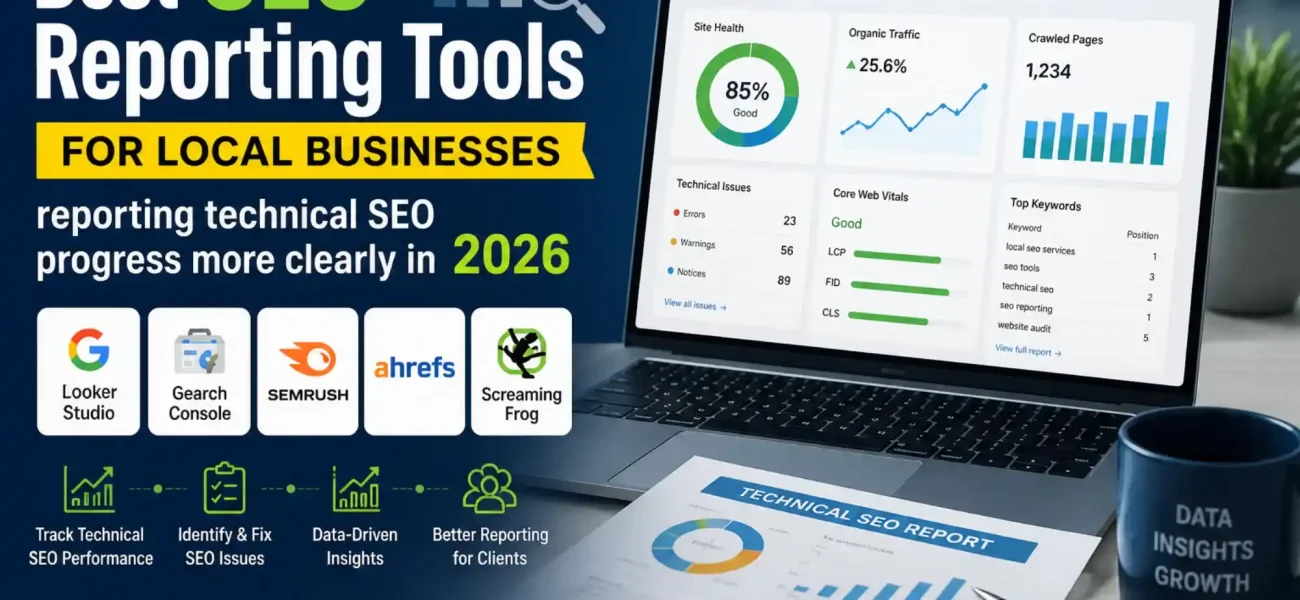
In 2026, local businesses are no longer competing solely on proximity—they’re competing on visibility, speed, and clarity of digital performance. SEO has evolved beyond rankings and traffic into something far more measurable: actionable technical insights. Yet for many small and medium-sized businesses, one persistent challenge remains—how to clearly report and understand SEO progress.
This is where modern SEO reporting tools step in. The right platform doesn’t just present data—it translates complex technical signals into meaningful business outcomes. Whether you’re managing a local service company, retail outlet, or multi-location brand, having clarity in reporting is what separates guesswork from growth.
In this guide, we’ll explore the best SEO reporting tools for local businesses in 2026, focusing on platforms that simplify technical SEO tracking while delivering real, measurable value.
Why Clear SEO Reporting Matters More Than Ever
SEO reporting has shifted from vanity metrics to performance intelligence. Local businesses need to understand not just what is happening, but why it’s happening and what to do next.
Clear reporting helps businesses:
- Identify technical issues affecting rankings
- Track improvements in site health and performance
- Measure ROI from SEO campaigns
- Align marketing strategies with business goals
If you’re already exploring broader strategies like
content marketing and advertising fundamentals,
you’ll understand that reporting is the bridge between strategy and execution.

Key Features to Look for in SEO Reporting Tools
Before diving into specific tools, it’s important to define what makes a reporting platform effective for local businesses.
1. Technical SEO Monitoring
Tools should track crawl errors, indexing issues, page speed, and mobile usability—core elements that directly impact search visibility.
2. Local Search Visibility Tracking
Accurate tracking of local rankings, map pack visibility, and geo-specific performance is essential for businesses targeting specific regions.
3. Customizable Dashboards
Reports should be easy to interpret. Custom dashboards allow businesses to focus on metrics that matter most.
4. Automation and Scheduling
Automated reports save time and ensure consistency, especially for agencies managing multiple clients.
5. Actionable Insights
The best tools go beyond data—they provide recommendations that guide decision-making.
Top SEO Reporting Tools for Local Businesses in 2026
1. Google Search Console (Enhanced Integrations)
While not new, Google Search Console remains foundational. In 2026, its integration capabilities with third-party dashboards have significantly improved.
It provides:
- Index coverage insights
- Core Web Vitals data
- Keyword performance metrics
For local businesses, it serves as the baseline for understanding how Google views their site.
2. SEMrush Local SEO Toolkit
SEMrush continues to dominate with its robust reporting capabilities. Its local SEO toolkit allows businesses to monitor rankings, track competitors, and audit technical issues—all in one place.
What sets it apart:
- Comprehensive site audits
- Local keyword tracking
- Automated reporting with visual dashboards
3. Ahrefs Webmaster Tools
Known for its backlink analysis, Ahrefs has expanded its reporting features to include detailed technical SEO insights.
Key strengths:
- Site health scoring
- Backlink monitoring
- Clear issue prioritization
This makes it particularly useful for businesses focused on improving authority alongside technical performance.
4. BrightLocal
BrightLocal is purpose-built for local SEO. Its reporting features are tailored for businesses that rely on local search visibility.
- Local rank tracking
- Google Business Profile insights
- Reputation management reporting
It’s especially effective for agencies managing multiple local clients.
5. Screaming Frog SEO Spider (Reporting Integration)
While traditionally a technical audit tool, Screaming Frog now integrates with reporting platforms to provide deeper insights.
It excels in:
- Identifying crawl issues
- Analyzing site structure
- Detecting duplicate content
How These Tools Improve Technical SEO Clarity
The real value of these tools lies in their ability to simplify complexity. Technical SEO can often feel overwhelming, but modern reporting platforms break it down into manageable insights.
For example, instead of presenting raw crawl data, tools now highlight:
- Critical errors affecting rankings
- Opportunities for quick wins
- Long-term optimization priorities
This shift aligns with broader SEO strategies discussed in
modern ranking strategies for digital growth,
where clarity and execution go hand in hand.
Common Mistakes in SEO Reporting (And How to Avoid Them)
1. Focusing on Vanity Metrics
Traffic alone doesn’t tell the full story. Businesses should prioritize metrics like conversions, technical health, and keyword intent.
2. Overcomplicating Reports
Too much data can overwhelm stakeholders. The best reports are simple, focused, and actionable.
3. Ignoring Technical Issues
Many businesses focus on content and backlinks while neglecting technical SEO. This creates hidden barriers to growth.
4. Lack of Strategy Alignment
Reporting should align with broader marketing goals. Understanding the difference between
marketing and advertising approaches
helps ensure SEO efforts contribute to overall business success.
Integrating SEO Reporting into Your Workflow
The effectiveness of any tool depends on how it’s used. Local businesses should integrate SEO reporting into their regular workflow.
Weekly Reviews
Monitor key metrics and identify immediate issues.
Monthly Analysis
Evaluate trends, track improvements, and adjust strategies.
Quarterly Strategy Updates
Use reporting insights to refine long-term SEO plans.
Advanced content strategies, such as those outlined in
content optimization techniques,
become significantly more effective when supported by accurate reporting.
The Future of SEO Reporting for Local Businesses
Looking ahead, SEO reporting will continue to evolve toward automation, AI-driven insights, and predictive analytics.
Key trends to watch:
- Real-time reporting dashboards
- AI-generated recommendations
- Integration with CRM and business tools
- Voice and visual search performance tracking
For local businesses, this means less time interpreting data and more time acting on it.
Final Thoughts
In 2026, the difference between average and exceptional SEO performance lies in clarity. The best SEO reporting tools empower local businesses to understand their technical SEO progress, make informed decisions, and drive sustainable growth.
By choosing the right tools and focusing on meaningful insights, businesses can move beyond surface-level metrics and build a stronger, more resilient online presence.
Ultimately, SEO reporting isn’t just about tracking performance—it’s about unlocking opportunities.
Related Reading: Best SEO Audit Tools for Local Businesses that make technical SEO fixes easier to prioritize in 2026
Related Reading: Best SEO Tools for Local Businesses to Improve Technical SEO in less Time in 2026 — full guide
Related Reading: Free vs Paid SEO Tools for Local Businesses: Which Option Makes More Sense in 2026?